

Civil Society
How to Start an NGO: A Step-by-Step Guide
Written from having done it in 2025. The registration is the easy part — what takes the time is the governance you have to build before anyone will fund you.
If you want to know how to start an NGO, the first useful correction is that in most countries you cannot. "NGO" is a description, not a legal category. What you register is whatever vehicle your national law provides — an association, a trust, a society, a foundation, or a company limited by guarantee — and the word NGO is applied afterwards.
This guide is written from having gone through it. Women's Light Foundation was established in 2025 as an association under Cameroon's Law No. 90/053 of 19 December 1990 on Freedom of Association. The sequence below is the one that worked, including the parts that took longer than expected.
1. Decide what problem you are actually solving
Before any paperwork, write one sentence describing who you serve and what changes for them. If that sentence needs a comma splice and three clauses, the organisation is not ready to register. A mandate that covers everything commits you to nothing and makes every funding application sound vague.
Then find out who already does this. If an organisation is serving the same people competently in the same place, joining or supporting it is usually a better use of the next three years than duplicating it. Founders rarely want to hear this and it is true often enough to be worth checking.
2. Choose the legal form
- Association — a membership body with statutes, a governing bureau and a general assembly. Standard across civil law countries, including most of Francophone and Central Africa. Fast to register and accountable first to its own members.
- Trust — assets held by trustees for a stated purpose, common in common law jurisdictions.
- Society — a registered membership body under societies legislation, used across South Asia and parts of East Africa.
- Foundation — endowed, usually funded by a founding gift rather than by members.
- Company limited by guarantee — a corporate form with no share capital, widely used in the UK, Nigeria and Ghana.
The choice is not cosmetic. It determines who must sit on your governing body, how often it must meet, what you file and when, and what happens to your assets if you dissolve. That last provision — the asset lock — is the mechanism that actually enforces non-profit status, by preventing anyone from winding the organisation up and taking what is left.
3. Draft statutes you can live with
Most jurisdictions publish a model constitution, and most founders copy it without reading it. Read it. The clauses that matter later are quorum, how the governing body is elected and removed, who signs financially, and how the statutes themselves are amended. Getting the amendment clause wrong means every subsequent correction requires a general assembly.
Write the object clause broadly enough to accommodate the next five years and narrowly enough to mean something. "Promoting development" will be accepted by a registrar and will help you with nobody else.
4. Assemble the founding members
Registration requires a minimum number of founding members and a governing bureau, typically a president, a secretary and a treasurer. Choose people who will attend meetings. A bureau of respected names who never appear produces a paralysed organisation with an impressive letterhead.

Separate the roles properly from day one. The person who commits expenditure should not be the person who approves it. This feels absurd in an organisation of four people and it is exactly what an auditor, and later a donor, will look for.
5. Register
Submit statutes, minutes of the founding assembly, member lists and identification to the responsible authority — in Cameroon, the Ministry of Territorial Administration. Expect the process to take weeks rather than days, and expect at least one document to come back for correction. Keep certified copies of everything, because you will be asked for them repeatedly and originals go missing.
6. Build the governance nobody asks about until they do
A newly registered organisation is legal. It is not yet fundable. The gap between the two is a set of documents that take a month to write and are the first thing a serious donor requests.
- A safeguarding policy and a policy on protection from sexual exploitation and abuse, binding on staff, volunteers and partners — see ours for the shape of it.
- A code of conduct that every person signs.
- A financial procedures manual covering authorisation limits, procurement and record-keeping.
- A conflict of interest policy with a declared register.
- A complaints mechanism the communities you serve can actually use, including about you.
- A data protection policy, particularly if you hold information about vulnerable people.
Write these before you need them. Producing a safeguarding policy in the week a funder asks for one is visible from the document, and it is visible to the person assessing you.
7. Do something small, and document it
Deliver one modest activity properly and record it: what you did, for how many people, what it cost, what changed, and what went wrong. Photographs with consent, an expenditure record, a short report.
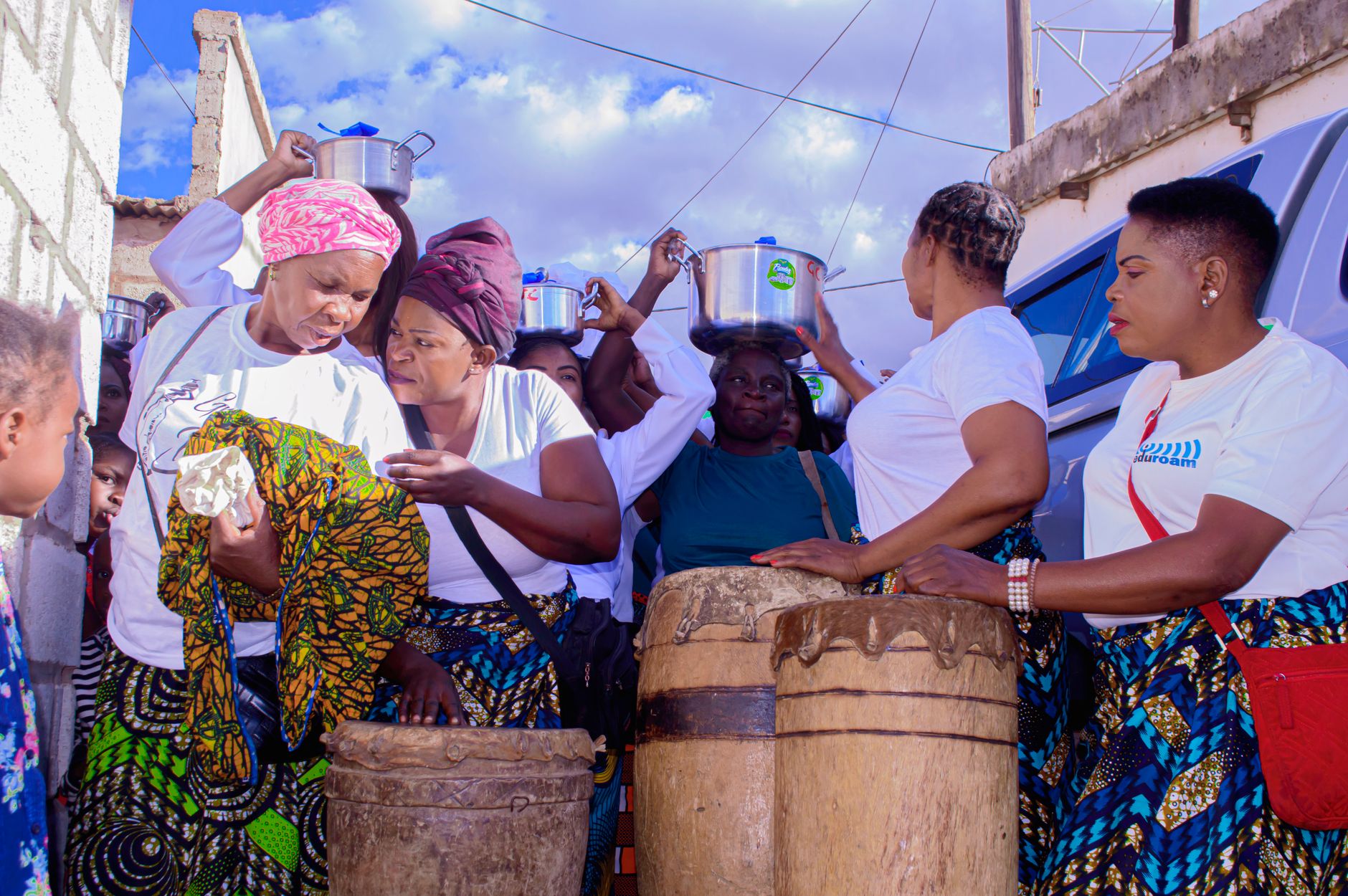
This is the asset that unlocks funding. Institutional donors assess track record, and a small completed activity with honest documentation is worth more in an application than an ambitious plan with none. It also teaches you your real unit costs, which is the number every budget you ever write depends on.
8. Fund it in the right order
Start with local contributions, membership fees and community fundraising — small amounts that establish legitimacy and are entirely unrestricted. Move to embassy small-grant schemes and local foundations, which are designed for organisations at your stage. Approach international NGOs as a local implementing partner. Institutional donors come last, because their compliance requirements assume an administrative capacity you will not have in year one.

Expect the first grant to take longer than you planned and to be smaller than you hoped. Plan on covering your first twelve months without external funding, because most organisations do.
What we would tell ourselves at the start
Register under the form your law actually offers rather than the status you eventually want; the upgrade comes later and comes easier with an audit history behind it. Separate financial and programme authority before you have anything to separate. Write the policies early. And treat the communities you serve as the people you answer to first, rather than only the people funding the work — the mechanism for that is a complaints channel they can use against you, and it is the one most organisations never build.
Frequently asked questions
How do I start an NGO?
Define the problem and who you serve, choose the legal form your national law provides, draft statutes, assemble founding members and a governing bureau, register with the responsible authority, open a bank account in the organisation's name, write your governance policies, then deliver and document one small activity before approaching funders.
Can I register as an NGO?
In most countries, no. NGO is a description rather than a legal category. You register as an association, trust, society, foundation or company limited by guarantee, depending on what your national law provides, and the term NGO is applied afterwards.
How much does it cost to start an NGO?
Registration fees themselves are usually modest. The real early costs are certified document copies, travel to the registering authority, bank account minimums, and the months of unpaid work before any funding arrives. Plan to cover the first twelve months without external funding.
How long does registration take?
Weeks rather than days in most jurisdictions, and longer if documents are returned for correction. Opening a bank account in the organisation's name frequently takes longer than the registration itself and should be started immediately after.
What documents do funders ask for first?
Registration certificate, statutes, a bank account in the organisation's name, a safeguarding and PSEA policy, a code of conduct, financial procedures, and evidence of something you have already delivered. The last one is the hardest to fake and the most persuasive.
Should I start an NGO at all?
Check first whether an organisation already serves the same people competently in the same place. If one does, joining or supporting it usually achieves more than duplicating it. Founding is worth it where there is a real gap and you intend to be there in five years.
Sources
- Charter of the United Nations, Article 71 — United Nations
- NGO Branch — consultative status with ECOSOC — United Nations
- Core Humanitarian Standard on Quality and Accountability — CHS Alliance
Related reading

Civil Society
Funds for NGOs: Where Grant Money Actually Comes From
Funds for NGOs exist in far greater volume than most small organisations realise. The obstacle is almost never the idea — it is…
Civil Society
NGO vs Nonprofit: What Is the Difference?
Every NGO is a nonprofit. Not every nonprofit is an NGO. The difference is not pedantry — it determines how you register, how you…

Civil Society
What Is an NGO? Meaning, Types and How They Actually Work
NGO means non-governmental organisation — but the label covers everything from a two-person village association to a federation…