Gender Justice
What Is Women's Empowerment? Definition, Types and Why It Matters
Women's empowerment means expanding a woman's ability to make choices that shape her own life — and then to act on them. The…
Accessibility
Text size
Display
Your choices are remembered on this device.
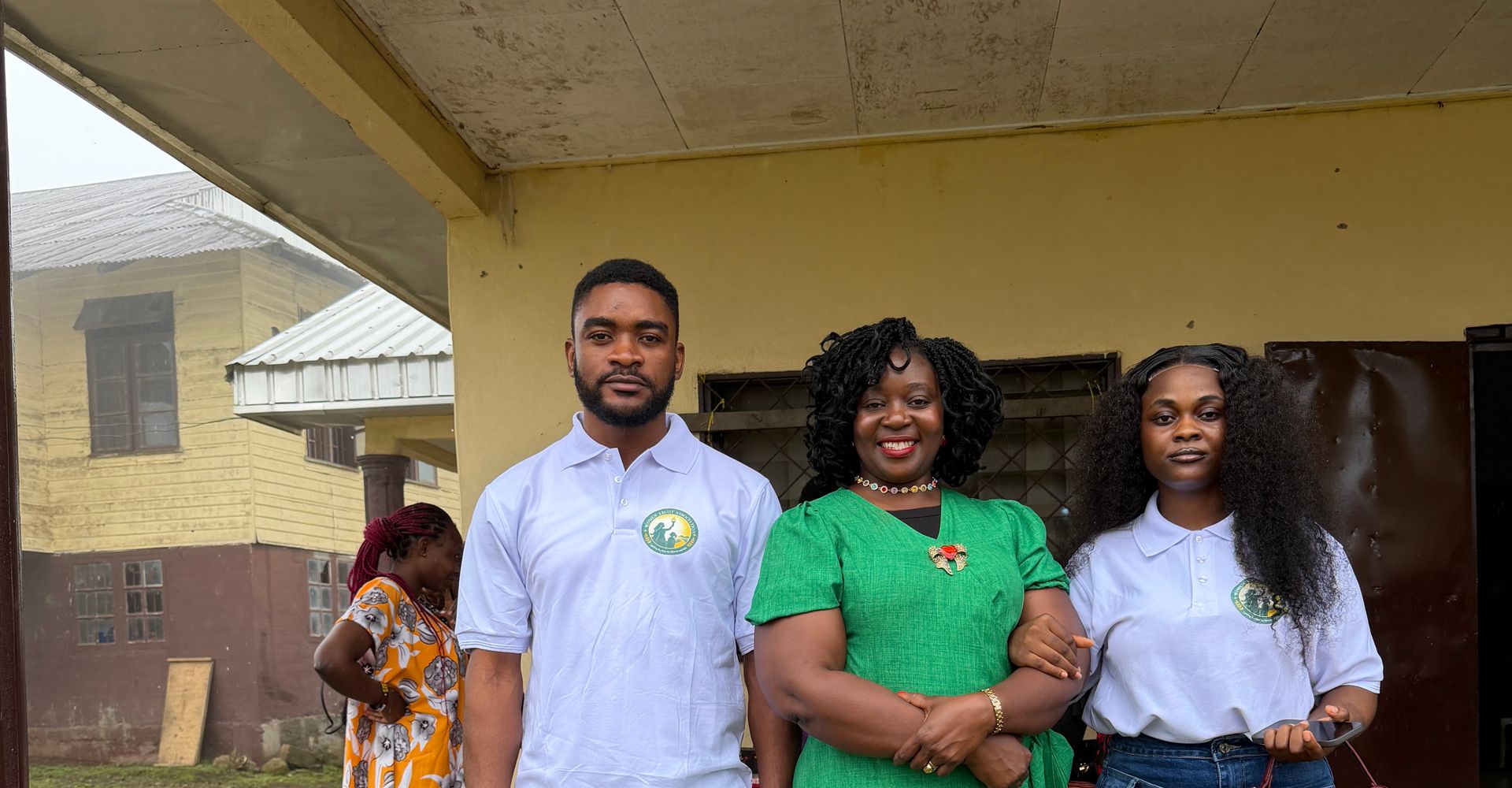
Cameroon's female literacy rate remains below 70%. We work to get underprivileged girls back into school, and to remove the things that push them out again — cost, distance, safety and shame.
300
Underprivileged girls we aim to re-enrol in our first year
1,000
Girls to be supported to stay in and complete school by year three (target)
5,000
Girls to be supported through to completion by year seven (target)
The challenge
Girls in Cameroon continue to face significant barriers to education, and almost none of them are academic. They are early and forced marriage, domestic responsibilities, school fees, distance to school and unsafe school environments. Girls from rural, impoverished or displaced communities are particularly disadvantaged.
The result is a female literacy rate that remains below 70%, and a pattern in which a girl's schooling ends not through a single decision but through an accumulation of small, practical pressures.
Eight interventions, targeted at the specific pressures that end a girl's schooling rather than at enrolment alone.
01
Direct support for fees and associated costs, prioritising girls from single-parent households, displaced families and the poorest communities.
02
Community-level work to identify out-of-school girls and negotiate their return with families and schools, rather than waiting for them to come forward.
03
Books, uniforms and equipment — among the most commonly cited reasons a family keeps a girl at home.
04
Working with schools on the physical and social conditions that make a girl feel safe enough to attend and to stay.
05
Addressing hunger as a barrier to attendance and to concentration once a girl is in the classroom.
06
Regular, structured groups where girls build confidence, discuss their rights, and find peers and mentors — and where problems surface early.
07
Menstrual hygiene management is a major barrier to attendance. We combine education, supplies and school facilities so that menstruation does not cost a girl a week of every month.
08
Connecting girls with Cameroonian women who have completed their education and built careers, so that the path is visible and not theoretical.
Who we serve
We prioritise the girls whose education is most at risk and who are least likely to be reached by mainstream provision.
Education programming brings adults into sustained contact with children, so safeguarding is not an add-on to this work — it is a precondition for it. Every member of staff and every volunteer is briefed before they work with children, and our child protection commitments apply to partners as well.
Targets drawn from our organisational framework, with the horizon against which we will report progress.
A bursary, a set of books, a year of school materials. These are small amounts of money that decide whether a girl finishes her education.
Install Women's Light Foundation
Add our app to your home screen for faster access, even on a slow connection.
On iPhone or iPad: tap the Share button, then choose "Add to Home Screen".