
Gender Justice
What Is Women's Empowerment? Definition, Types and Why It Matters
Women's empowerment means expanding a woman's ability to make choices that shape her own life — and then to act on them. The second half is where most programmes fail.
Women's empowerment is the process of expanding a woman's ability to make strategic choices about her own life — and to act on them — in contexts where that ability has been restricted or denied.
The definition most widely used in development comes from the economist Naila Kabeer, who framed empowerment as the expansion of the ability to make strategic life choices where that ability was previously absent. Two elements in that phrasing carry the weight. Strategic choices are the consequential ones: whether and whom to marry, whether to have children and when, whether to work, whether to leave. And the phrase "previously denied" is what separates empowerment from ordinary capability — you cannot be empowered to do something you were already free to do.
The part that gets dropped
Empowerment has two halves, and programmes routinely deliver one and count it as both.
The first is the resource or the opportunity: the training, the loan, the school place, the legal right. The second is agency — the practical capacity to use it. A woman who is granted a legal right to inherit land in a community where no woman has ever done so, and where the customary authority that actually adjudicates land does not recognise the statute, has the first half and not the second. A woman given a micro-loan whose husband controls every decision about the household's money has received a resource that will be spent by someone else.
This is the most common failure mode in empowerment programming, and it is why measurement matters. Counting loans disbursed, training sessions delivered or girls enrolled measures inputs. Whether the woman decides how the loan is used, whether she can leave the house without permission, whether she keeps what she earns — those measure whether anything changed.
The five dimensions
Economic empowerment
Access to and control over income, assets, credit and markets. The distinction between access and control is the whole subject. Women across much of sub-Saharan Africa constitute the majority of smallholder farmers and informal traders while holding a small fraction of the land title, formal credit and agricultural training. They have access to the work and not to the assets that make the work compound.
Educational empowerment
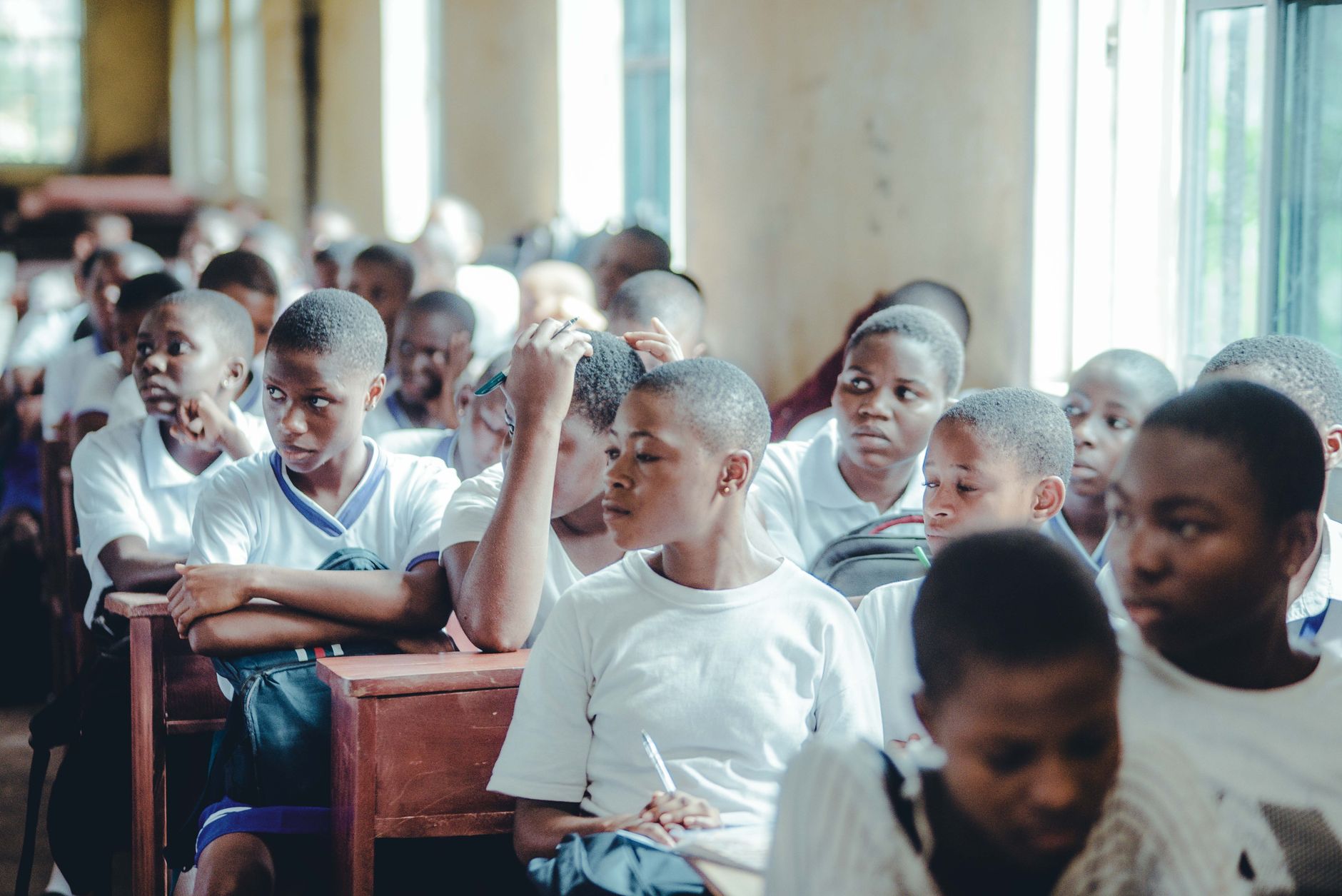
Literacy, schooling, and the completion of it. Completion is the operative word: enrolment figures conceal how many girls leave before finishing, and the reasons for leaving are usually mundane and solvable — school fees, distance, the absence of a usable latrine, early marriage, pregnancy, or the household deciding that a daughter's labour is needed more than her certificate.
Social empowerment
Standing within the household and the community: freedom of movement, participation in decisions, freedom from violence, access to health care and to networks beyond the family. Freedom from violence belongs here rather than in a separate category, because a woman managing an immediate threat to her safety is not in a position to exercise any other choice.
Political empowerment
Voice in collective decisions — voting, holding office, leading community structures, and being present in the bodies that allocate resources. Quotas can move the numbers quickly and do not by themselves produce influence; a seat without a speaking role is representation without power.
Psychological empowerment
Self-efficacy: the belief that acting is possible and that one's own judgement is worth acting on. It is the least tangible dimension and frequently the binding constraint. Where a woman has internalised that decisions are not hers to make, removing the external barrier changes less than expected — which is why peer groups, collective structures and the visible example of other women doing the same thing tend to outperform individual interventions.
Empowerment and gender equality are not the same thing
Gender equality describes a condition: equal rights, resources and opportunities regardless of gender. Empowerment describes a process: the movement of a person or group from less power to more. Equality is the destination; empowerment is one of the roads.
The distinction has a practical consequence. Equality can, in principle, be legislated. Empowerment cannot be conferred from outside at all — it is something a person undertakes, and what an external organisation can do is remove barriers and supply resources. This is not a semantic point. An organisation that believes it empowers women will design programmes that deliver things to beneficiaries. An organisation that understands it can only create conditions will design programmes that transfer control, and will measure whether control actually moved.
How it is measured
Several established instruments exist. The Women's Empowerment in Agriculture Index measures decision-making over production, resources, income, leadership and time use. Demographic and Health Surveys ask directly about participation in household decisions, attitudes to wife-beating, and freedom of movement. The UNDP Gender Inequality Index and the World Economic Forum Global Gender Gap Report track national-level indicators.
At programme level the most informative questions are unglamorous and specific. Who decides how the money you earn is spent? Can you travel to the market or the clinic without asking permission? Do you hold an account in your own name? If you disagreed with a decision in your household, what would happen? Answers to those shift — or fail to shift — in ways that enrolment and disbursement figures cannot show.
What it looks like in practice
In our own work the principle that follows from all of this is sequencing. Capital given before skills tends to be consumed rather than invested. Awareness raising conducted without reachable services raises expectations that cannot be met. Training delivered without addressing who controls the resulting income produces a woman who works more and decides no more than before.
So savings groups come with financial literacy and with the group itself as a structure that outlasts our involvement. Bursaries for girls in school come with the water and sanitation that determines whether attendance is actually possible. Violence prevention runs alongside livelihoods rather than after it, because economic dependence is one of the strongest predictors of whether a woman can act on a safety decision at all. And norms work with men, boys and traditional authorities runs throughout, because a household's decision-making is not changed by addressing only one person in it.
Why it matters beyond the individual
The instrumental case is well documented: income controlled by women is more likely to reach children's nutrition, health and schooling; maternal education is among the strongest predictors of child survival; closing gender gaps in agricultural inputs raises yields. These findings are real and they are worth citing to ministries and funders.

They are also not the reason. The case for a woman being able to decide the direction of her own life does not depend on what that produces for anyone else. The development returns are a consequence, and a convenient one. The argument stands without them.
Frequently asked questions
What is women's empowerment?
Women's empowerment is the process of expanding a woman's ability to make strategic choices about her own life — and to act on them — in contexts where that ability has been restricted or denied. It has two parts: the resource or opportunity, and the practical agency to use it.
What are the types of women's empowerment?
Five dimensions are commonly distinguished: economic (income, assets, credit), educational (literacy and school completion), social (standing, mobility, freedom from violence), political (voice in collective decisions) and psychological (self-efficacy). They reinforce each other, which is why single-dimension programmes tend to lose their gains.
What is the difference between women's empowerment and gender equality?
Gender equality describes a condition — equal rights, resources and opportunities. Empowerment describes a process of moving from less power to more. Equality is the destination; empowerment is one route to it. Equality can be legislated; empowerment cannot be conferred from outside.
What is economic empowerment for women?
Access to and, critically, control over income, assets, credit and markets. The distinction matters: women make up the majority of smallholder farmers and informal traders in much of sub-Saharan Africa while holding a small share of land title, formal credit and training.
How is women's empowerment measured?
Through instruments such as the Women's Empowerment in Agriculture Index, Demographic and Health Survey questions on household decision-making and freedom of movement, and national indices like the UNDP Gender Inequality Index. At programme level the useful measures are specific: who decides how earned money is spent, whether a woman can travel without permission, whether she holds an account in her own name.
Why do empowerment programmes fail?
Most commonly because they deliver a resource without addressing agency — a loan whose use someone else controls, or a legal right that local adjudicating authorities do not recognise. The second common failure is treating one dimension in isolation, so that gains in one are eroded by untouched barriers in another.
Sources
- Facts and figures: Ending violence against women — UN Women
- Girls' and women's education — UNESCO
- Demographic and Health Surveys programme — USAID / ICF
Related reading
Livelihoods
What Is Economic Empowerment, and What Makes It Last?
Economic empowerment is not income. It is control over income — and the gap between the two is where most livelihoods programmes…
Education
Why Girls' Education Matters — and What Keeps Girls in School
The importance of girls' education is not disputed. What gets less attention is that most girls who drop out leave for reasons…
Water & Sanitation
World Water Day: Why Clean Water Is a Women's Issue
World Water Day is marked every 22 March. The statistic that should define it is not how many people lack clean water, but who…