Gender Justice
What Is Gender-Based Violence? Types, Causes and Effects
GBV means violence directed at a person because of their gender, or that affects one gender disproportionately. It is not a synonym for domestic violence, and the difference determines what a response has to cover.
Gender-based violence, usually shortened to GBV, means any harmful act directed at a person because of their gender, or that affects people of one gender disproportionately. The definition used across the humanitarian sector, drawn from the Inter-Agency Standing Committee guidelines, covers acts that inflict physical, sexual, mental or economic harm, along with threats of such acts, coercion, and the arbitrary deprivation of liberty.
Two things in that definition are easy to miss. It includes threats and coercion, not only completed acts — a credible threat is itself the violence, because it produces the control it is intended to produce. And it includes economic harm, which is routinely excluded from popular understanding and is one of the most effective mechanisms of control there is.
GBV is not a synonym for domestic violence
Domestic violence describes violence within a household or intimate relationship. It is the largest single component of GBV and it is not the whole of it. GBV also covers sexual violence by strangers and acquaintances, harassment in workplaces and schools, trafficking, harmful traditional practices carried out by extended family or community, violence against women in public life, and conflict-related sexual violence.
The distinction has an operational consequence. A response designed only around the household misses the schoolgirl harassed on the route to school, the trader coerced at the market, and the woman whose family — not her partner — is arranging her marriage.
The six forms
Physical violence
Hitting, beating, burning, the use of weapons, and the deprivation of food, sleep or medical care. Non-fatal strangulation belongs here and deserves separate mention: it is one of the strongest known predictors of a subsequent killing, and it is frequently recorded as a minor assault by systems unaware of that.
Sexual violence
Rape, attempted rape, sexual assault, sexual harassment, forced prostitution and sexual exploitation. Marital rape is included, and is not recognised as an offence in a substantial number of national legal systems — one of the clearest examples of a gap between the definition of harm and the law's willingness to name it.
Emotional and psychological violence
Humiliation, threats, isolation from family and friends, constant surveillance, and controlling behaviour. Survivors frequently describe this as the most damaging form and the hardest to report, because it leaves no evidence and because the isolation it produces removes the people who would otherwise notice.
Economic violence
Withholding money, confiscating earnings, forbidding work, running up debts in a partner's name, and destroying the means of earning a living. Economic violence is the mechanism that makes leaving impossible, which is why livelihoods work and violence prevention are not separate agendas.
Harmful traditional practices
Female genital mutilation, child and forced marriage, so-called "honour" violence, breast ironing, and widow disinheritance and rituals. These are distinguished by being carried out with community or family sanction, which means they cannot be addressed by criminalisation alone — the response has to engage the authority that sanctions them.
Technology-facilitated violence
Online harassment, stalking through phone tracking, threats over messaging platforms, and the non-consensual sharing of intimate images. The newest category, growing fastest, and the one for which legal remedies are least developed almost everywhere.
What causes it
The root cause is unequal power between genders, sustained by social norms that treat that inequality as natural. Everything else in the standard list of causes is a risk multiplier operating on top of that base.
This matters because multipliers get mistaken for explanations. Poverty is associated with higher reported rates of intimate partner violence — and violence occurs at every income level, so poverty cannot be the cause. Alcohol is present in a large share of incidents and does not create the belief that a partner may be struck; it lowers the restraint on acting on a belief already held. Conflict and displacement raise rates sharply by removing protective structures and creating impunity. Each of these increases the frequency of violence. None of them produces the entitlement that violence expresses.
The effects
The immediate physical consequences are the visible part: injury, unintended pregnancy, sexually transmitted infection, and maternal complications where violence occurs during pregnancy. The longer consequences are less visible and often larger — chronic pain, depression, post-traumatic stress, and substantially elevated rates of suicidal ideation.
There are educational and economic effects too. Girls experiencing violence at or en route to school attend less and complete less. Women experiencing violence lose working days, lose employment, and lose the earnings that would fund an exit. And children who witness violence in the household show elevated rates of both experiencing and perpetrating it later, which is the mechanism by which a household's pattern becomes a generation's.
What a survivor-centred response means
Survivor-centred is a specific commitment, not a tone. It means the survivor decides what happens next — whether to report, whether to seek medical care, whether to leave, whether to tell anyone else — and that includes deciding to do nothing at all. The role of a service is to make each option genuinely available and then to accept the choice.
That principle is harder to hold than it sounds, because the decision a survivor makes is frequently not the one a service would make for her, and because staff who believe they know the safer course will apply pressure without recognising it as pressure. But a survivor who is overridden once does not return, and the option to return is often the thing that matters most.
- Safety first — including safety planning around the period after separation, which is consistently the most dangerous.
- Confidentiality, because in communities where disclosure carries social cost, confidentiality determines whether anyone discloses at all.
- Non-discrimination, so that services do not depend on marital status, age, disability or origin.
- Referral pathways that connect health care, legal aid, psychosocial support and economic assistance to each other rather than returning the survivor to the start each time.
- Economic support, without which many decisions about safety are not actually available.
Prevention, which is the part that is usually underfunded
Response services treat harm that has already occurred. Prevention addresses the conditions that produce it, and the evidence on what works is more settled than the funding patterns suggest: sustained work on norms with men and boys, engagement of traditional and faith authorities who hold real influence over household expectations, economic empowerment that changes who controls resources, school-based programmes on consent and respectful relationships, and community mechanisms that make bystanders willing to intervene.
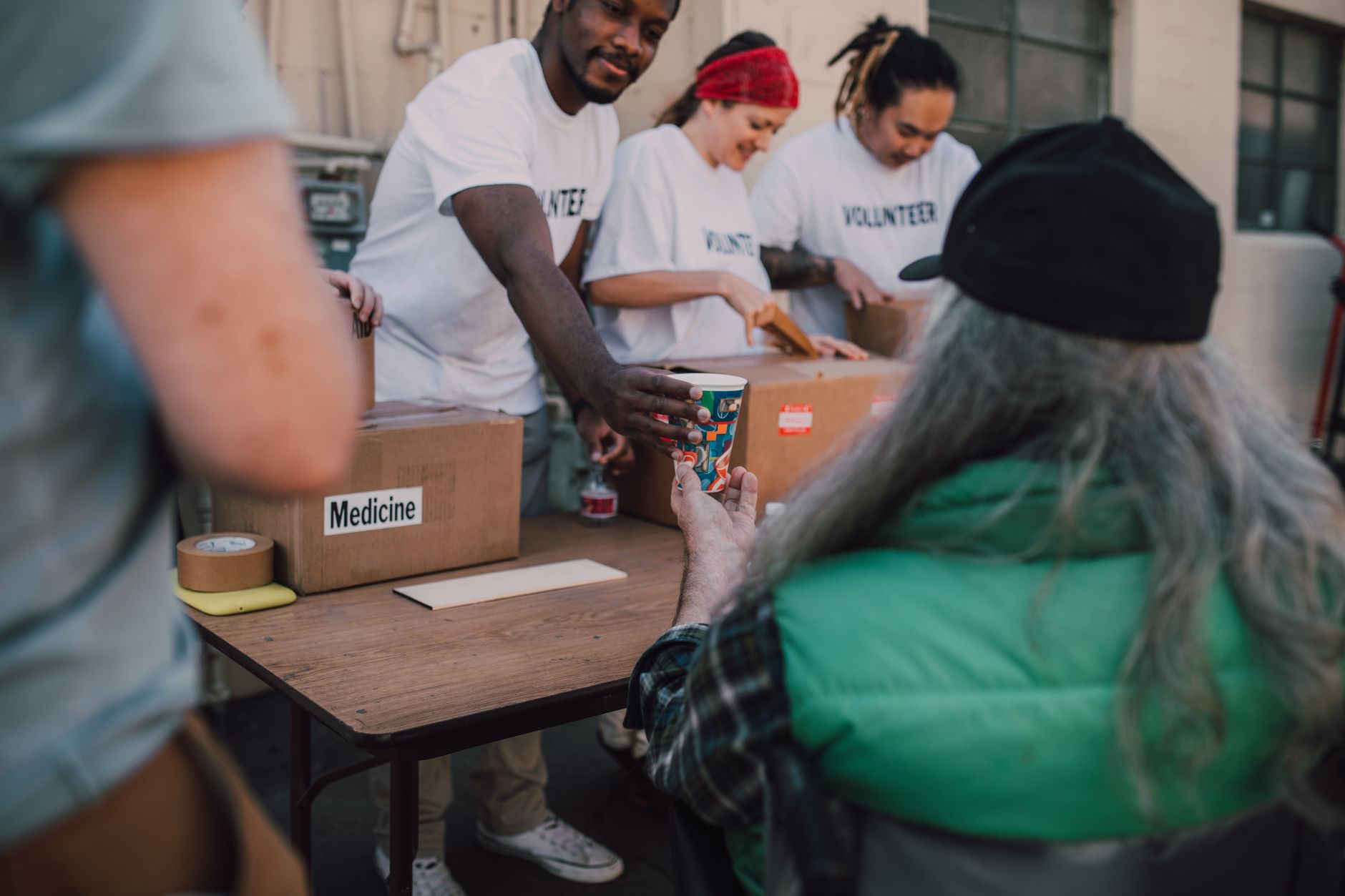
None of that produces results within a single project cycle, which is precisely why it is chronically underfunded, and why organisations working on it need to be honest that the timeline is generational rather than annual.
Frequently asked questions
What is gender-based violence?
Any harmful act directed at a person because of their gender, or that affects people of one gender disproportionately. It covers physical, sexual, mental and economic harm, as well as threats, coercion and the arbitrary deprivation of liberty.
What does GBV stand for?
GBV stands for gender-based violence. The abbreviation is standard across humanitarian and development organisations, including in the Inter-Agency Standing Committee guidelines that most agencies work to.
What are the types of gender-based violence?
Six forms are commonly distinguished: physical violence; sexual violence; emotional and psychological violence; economic violence; harmful traditional practices such as female genital mutilation and child marriage; and technology-facilitated violence including online harassment and image-based abuse.
What causes gender-based violence?
The root cause is unequal power between genders, sustained by social norms that treat that inequality as normal. Poverty, alcohol, conflict and displacement raise the frequency but do not create the entitlement the violence expresses — they are risk multipliers rather than causes.
Is gender-based violence the same as domestic violence?
No. Domestic violence — violence within a household or intimate relationship — is the largest component of GBV but not the whole of it. GBV also includes sexual violence outside the home, harassment in schools and workplaces, trafficking, harmful traditional practices, and conflict-related sexual violence.
What does survivor-centred mean?
It means the survivor decides what happens next — whether to report, seek medical care, leave or tell anyone — including the decision to do nothing. The service's role is to make each option genuinely available and then accept the choice made.
Sources
- Violence against women (fact sheet) — World Health Organization
- IASC Guidelines for Integrating Gender-Based Violence Interventions in Humanitarian Action — Inter-Agency Standing Committee
- Facts and figures: Ending violence against women — UN Women
Related reading
Gender Justice
Femicide: What It Is, Why It Happens, and What Prevention Actually Looks Like
Femicide is the killing of women and girls because they are women. It is the most extreme point on a continuum of violence that…
Gender Justice
Violence Against Women: The Facts, and What They Miss
About one in three women worldwide has experienced physical or sexual violence. The number is reliable, widely cited, and tells…
Gender Justice
International Day for the Elimination of Violence Against Women
Marked every 25 November, and named for three sisters murdered in 1960. It opens the 16 Days of Activism — and it is the one day…