
Water & Sanitation
Menstrual Hygiene Day: Period Poverty and Why Girls Miss School
Marked every 28 May. Period poverty is not only about the cost of pads — it is about whether a school has water, a door that locks, and somewhere to dispose of anything.
Menstrual Hygiene Day is marked every year on 28 May. The date is not arbitrary: May is the fifth month, referencing the average five days of menstruation, and 28 references the average length of a cycle. It was initiated in 2014 by the German organisation WASH United and is now observed worldwide.
The campaign exists because menstruation sits at the intersection of health, education, water and sanitation, and dignity — and tends to fall between the programmes responsible for each of them.
What period poverty actually covers
Period poverty is commonly understood as not being able to afford menstrual products. That is one component of four, and on its own the easiest to solve and the least sufficient.
- Products — pads, cloths or cups, and the money to obtain them each month.
- Facilities — water for washing, a private space with a door that locks, and a way to dispose of or dry materials.
- Information — knowing what menstruation is before it starts, which a substantial proportion of girls still do not.
- Stigma — the silence and shame that make asking for help difficult even when help exists.
A programme that distributes pads into a school with no water and no lockable latrine has addressed one quarter of the problem and will see very little change in attendance. This is the most common design error in menstrual health programming, and it is popular precisely because product distribution is visible, countable and photographs well.
The school attendance question
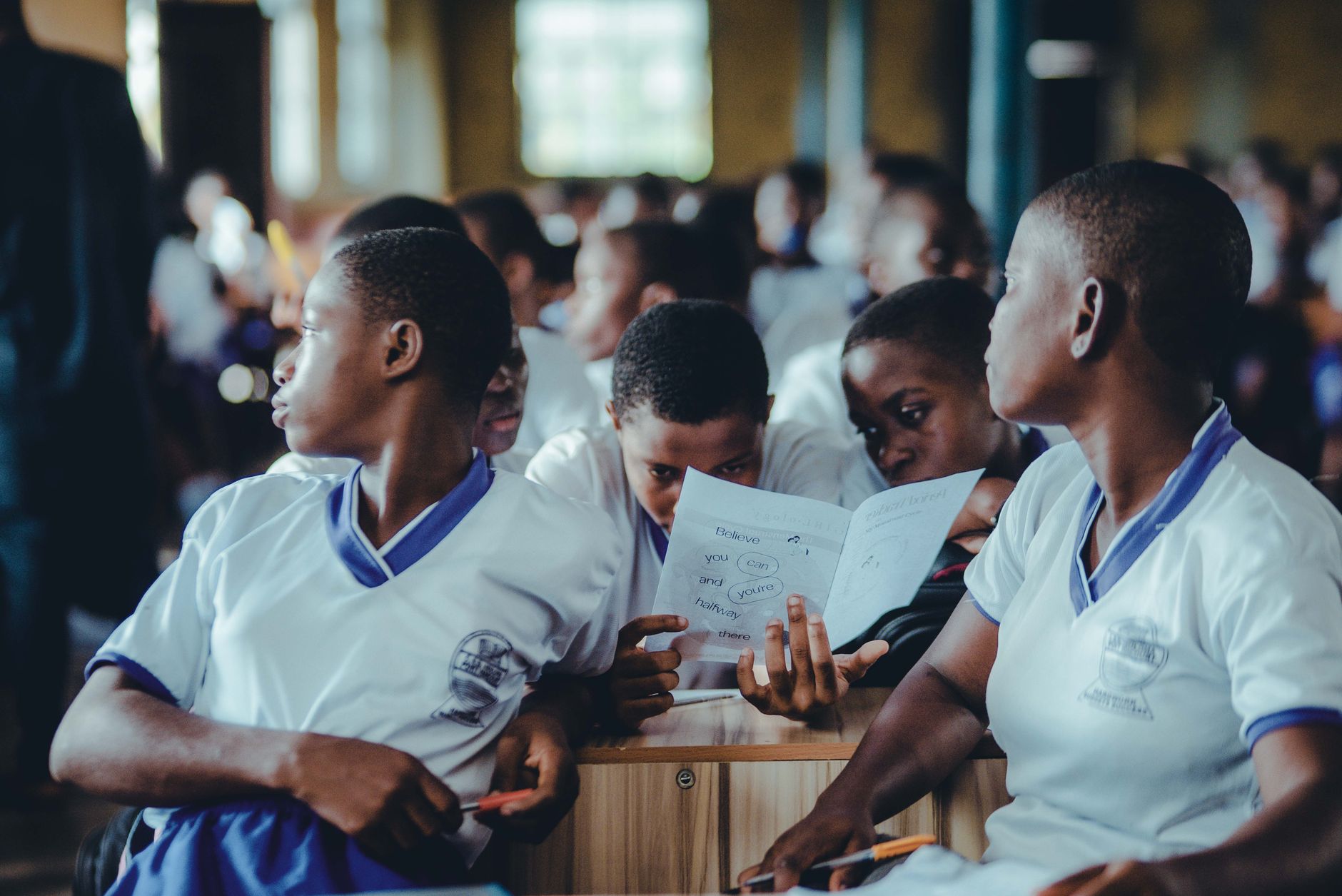
A girl who cannot manage menstruation privately and hygienically at school misses days each month. Across a school year that accumulates into weeks of lost instruction; across several years it becomes a measurable gap in attainment, and eventually a reason for leaving altogether.

What is worth being careful about is the specific claims. A number of widely circulated statistics about exactly how many days girls miss have been challenged for weak sourcing, and repeating a figure that does not hold up damages the argument it was meant to support. The underlying pattern — that inadequate facilities reduce attendance for menstruating girls — is well established. The precise national figures frequently are not, and it is better to say so.
Why boys belong in the session
Menstrual health education is routinely delivered to girls alone, with boys sent outside. This preserves exactly the silence the programme is meant to dismantle, and it leaves the teasing that drives avoidance entirely unaddressed.

Where boys and male teachers are included, the reported experience of girls improves — not because boys need the biological information for themselves, but because stigma is largely maintained by people who do not menstruate. The same logic applies to fathers, who frequently control household spending on products they have never discussed.
Products: reusable or disposable
Reusable pads and cups cost far less over time and generate no monthly purchase. They also require reliable water for washing, privacy for drying, and a level of initial instruction that a single distribution event does not provide. Introduced without those, they go unused.
Disposable products need no water and create a recurring cost and a disposal problem. Neither option is correct in the abstract — the answer depends on whether water and privacy exist where the girl lives, which is a question about infrastructure rather than about products.
How we approach it
We treat menstrual hygiene management as part of water and sanitation rather than as a separate health activity, because the binding constraint is almost always the facility rather than the product. School sanitation work includes the water point, the lockable door and the disposal option together, on the basis that two out of three leaves the facility unused.

It connects directly to girls' education, which is the point of doing it. The latrine is not a health intervention that happens to be in a school. It is an education intervention that happens to be a latrine.
Frequently asked questions
When is Menstrual Hygiene Day?
28 May each year. The date references the average 28-day menstrual cycle, and May as the fifth month references the average five days of menstruation. It was initiated in 2014 by WASH United.
What is period poverty?
It covers four things: the cost of menstrual products; the absence of facilities such as water, a lockable private space and disposal; lack of information before menstruation begins; and the stigma that makes asking for help difficult. Products alone address one quarter of it.
Why do girls miss school during menstruation?
Most often because the school lacks water, a private lockable latrine and a way to dispose of or dry materials. Where those are absent, girls stay home regardless of whether products have been distributed.
Are reusable or disposable products better?
It depends on infrastructure. Reusable pads and cups cost far less over time but require reliable water, drying privacy and proper instruction. Disposables need no water but create recurring cost and disposal problems. The right answer follows from what exists locally.
Should boys be included in menstrual health education?
Yes. Delivering sessions to girls alone preserves the silence the programme is meant to dismantle and leaves teasing unaddressed. Stigma is largely maintained by people who do not menstruate, which is also why fathers matter — they often control spending on products they have never discussed.
Sources
- Menstrual Hygiene Day — WASH United
- WHO/UNICEF Joint Monitoring Programme for Water Supply, Sanitation and Hygiene — WHO / UNICEF
- Girls' and women's education — UNESCO
Topics
Related reading
Education
Why Girls' Education Matters — and What Keeps Girls in School
The importance of girls' education is not disputed. What gets less attention is that most girls who drop out leave for reasons…
Water & Sanitation
Clean Water and Sanitation: SDG 6 Explained
SDG 6 promises water and sanitation for all by 2030. The world is not on track, and the reason is less about drilling wells than…
Water & Sanitation
World Water Day: Why Clean Water Is a Women's Issue
World Water Day is marked every 22 March. The statistic that should define it is not how many people lack clean water, but who…